
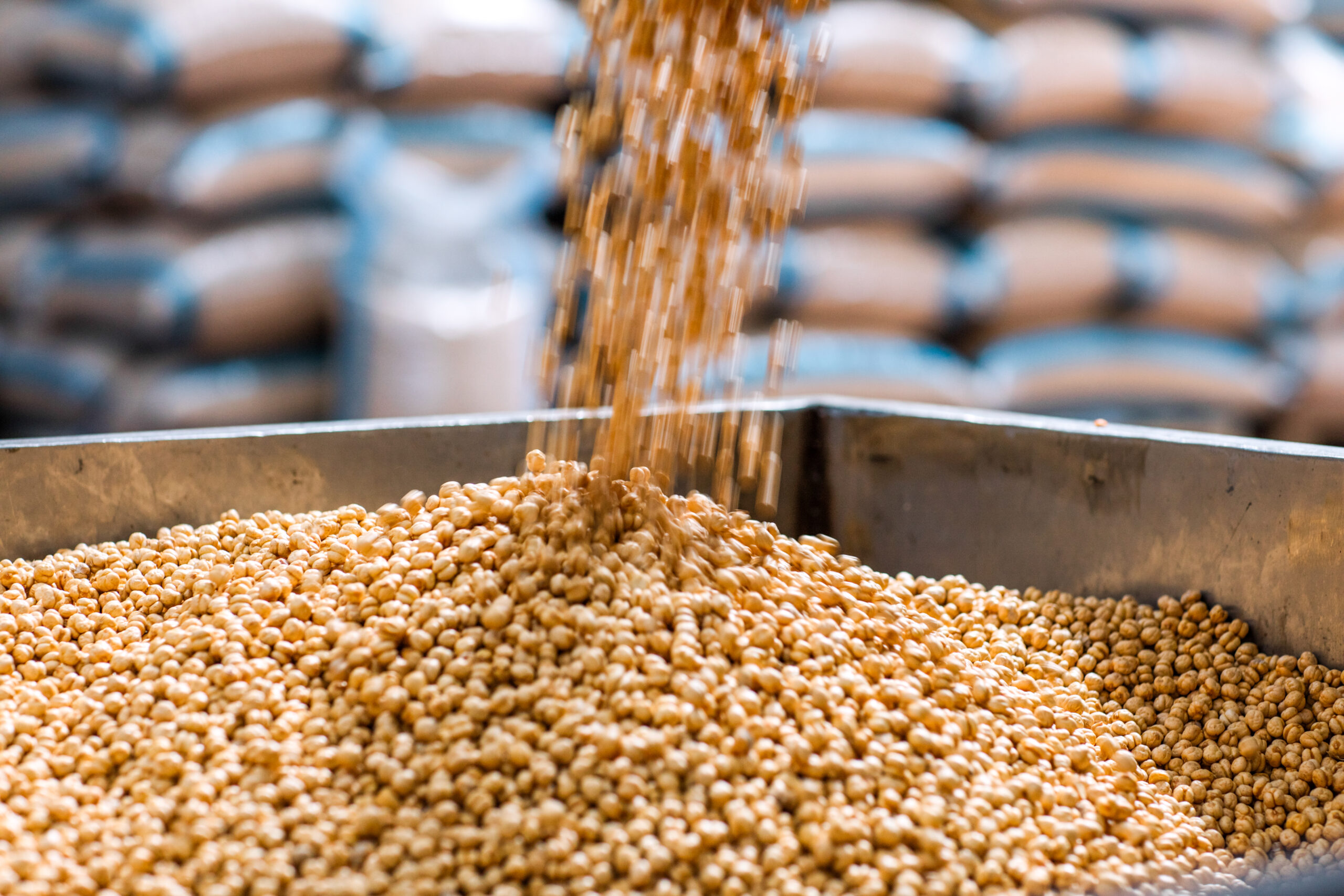
Soybean meal (SBM) is the main source of crude protein (CP) and digestible amino acids (AA) in non-ruminant diets worldwide, with Brazil, USA, and Argentina as main suppliers. Because of the high level of inclusion, SBM is also a major contributor to the energy content of commercial diets for all species. Sound nutrition practices require a good knowledge of the nutrient content of the ingredients used, not easy to achieve when tabulated values are used, especially for SBM when the country of origin of the beans is not taken into consideration. Numerous factors (e.g., weather conditions at harvest, latitude of the production area, agronomic practices, and soil characteristics) affect seed quality, which together with the conditions applied during the oil extraction process, will define the quality and nutritional value of commercial SBM. In general, soybeans produced far from the Equator (temperate areas) contain less oil and protein but more sucrose and α-galactosides than soybeans produced close to the Equator. Also, extreme weather conditions at harvest increase moisture content and microbial and fungi contamination of the soybeans, which will increase the incidence of sprouting and fermentation processes. As a result, the contents in sucrose and key AA, such as Lys and Cys, which are highly sensitive to an excess of heat, will be reduced. However, CP content, which is estimated as nitrogen (N) x 6.25, will increase, because the N released during the process will remain in the meal. Soybean processing increases the nutritional value of the resulting SBM by two distinct mechanisms: a) a reduction of antinutritional factors (ANF) and b) an improvement of protein digestibility caused by changes in the secondary structure of the SBM. Consequently, accurate processing will improve the quality of the SBM. The trypsin inhibitors present in raw soybeans, are partially inactivated by the heat and pressure applied to dry the soybeans, both at the farm level and during the oil extraction process. Because of complexity and cost, SBM protein quality is estimated indirectly, using laboratory procedures (urease activity, protein digestibility index, KOH solubility, and others). However, none of these methods is perfect, and each of them has its own pros and cons. This presentation will focus on the influence of soybean origin, on the carbohydrate and amino acid content of commercial SBM, as well as on the correlation between a) presence of ANF in the processed meal, b) procedures used by the industry to determine protein quality, and c) in vivo AME and AMEn values and ileal digestible protein and AA contents. In addition, information on how to improve the accuracy of available prediction equations to estimate the AMEn content of the SBM, based on chemical traits, will be presented.
View the presentation of this abstract here.
Mateos, G., R. Lazaro, G. Talegon and L. Camara. 2026. Main Factors Affecting the Nutritional Value of Soybean Meals. Importance of Quality Control and Country of Origin of the Soybeans. ASAS Midwest Section Meeting. Abstract 178. https://doi.org/10.1093/jas/skag107.218