
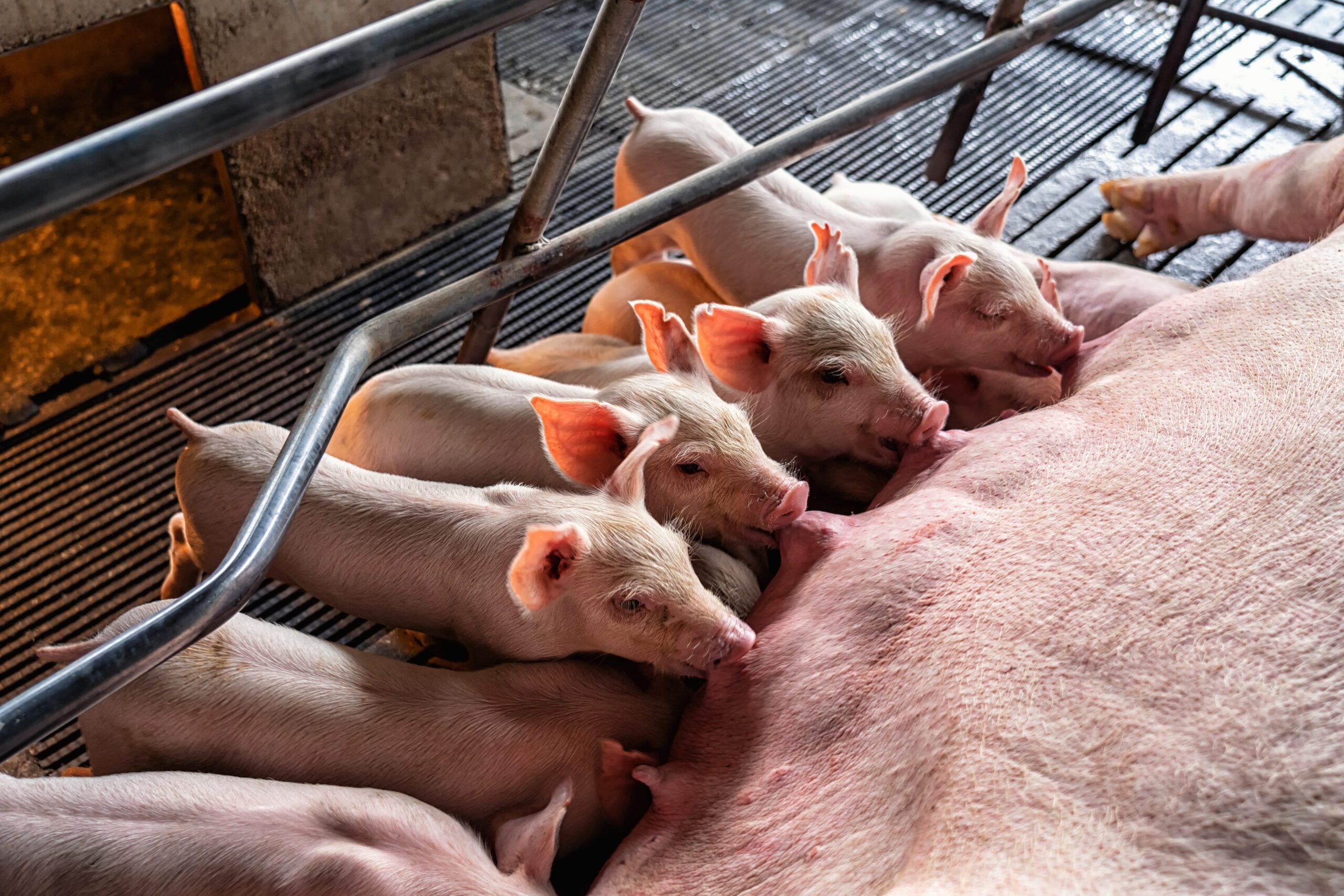
As litter sizes increase, sows have greater metabolic and nutritional demands to support litter development, particularly during late gestation. This study evaluated a nutrient-enriched late-gestation phase (LGPHASE) diet on maternal and progeny biomarkers and farrowing duration. Seventy sows (parity 0–5) at 70 ± 2 days gestation were allotted by parity, body weight, previous reproductive performance, and hemoglobin (Hb) to a control (CON; n = 35; 11% CP, 0.52% SID lysine, industry-standard organic trace minerals, and vitamins) or the LGPHASE diet (n = 35; 16% CP, 0.87% SID lysine, 2× CON industry-standard organic trace minerals and vitamins except selenium, plus 500 mg/kg vitamin C) fed from days 70 to 110 of gestation. All sows received a common lactation diet. Sow blood samples and body measurements were collected on days 70 and 110 of gestation, day 2 of lactation and at weaning (lactation day 19 ± 3). Piglets were weighed and tested for Hb at birth (n = 974) and weaning (n = 826). Serum was collected from 2 piglets per litter (n = 140) at 40–48 h after birth and at weaning. Serum was analyzed for copper, iron, zinc, ferritin, and 25(OH)D₃. Whole blood was evaluated for red blood cell indices. Reproductive performance and blood markers were analyzed using PROC MIXED (SAS 9.4) with dietary treatment as a fixed effect and sow as a random effect. Farrowing duration was shorter in LGPHASE than CON sows (290.4 vs. 359.9 min; P = 0.028). Litter size and birth weight were similar between treatments, however, a reduced stillbirth rate tended to occur in LGPHASE sows (3.4% vs. 6.8%; P = 0.099). LGPHASE sows tended to wean more (13.4 vs. 12.3; P = 0.062) and lighter pigs (5.70 vs. 6.16 kg; P = 0.087) with increased piglet survivability (90.5% vs. 84.8%; P = 0.019). LGPHASE sows tended to have higher Hb at day 110 (11.2 vs. 10.7 g/dL; P = 0.091) and had higher Hb at weaning (10.7 vs. 9.9 g/dL; P = 0.004) than CON sows. At day 110, LGPHASE sows had greater serum 25(OH)D3 (54.8 vs. 35.5 ng/mL; P = 0.002), and tended to have greater serum ferritin at weaning than CON sows (38.5 vs. 28.3 ng/mL; P = 0.074). At day 2, LGPHASE piglets had greater serum ferritin (25.1 vs. 19.1 ng/mL; P = 0.079). At weaning, serum copper was greater in LGPHASE piglets (2.26 vs. 2.17 µg/mL; P = 0.022) and serum 25(OH)D3 tended to be greater than CON piglets (7.5 vs. 6.9 ng/mL; P = 0.080). In conclusion, late-gestation nutrient requirements exceed levels typically fed, with increased amino acid and micronutrient supply improving micronutrient status, shortening farrowing duration, and enhancing piglet viability, resulting in improved pre-weaning survival.
McClellan, K., A. Camargo, B. Lawrence, S. Hough, J. Bergstrom, M. Weaver, R. Robbins and E. Weaver. 2026. Feeding the Prolific Sow for Success, Part I: Late-gestation Phase Feeding Improves Maternal and Progeny Micronutrient Status and Piglet Viability in Prolific Sows. ASAS Midwest Section Meeting. Abstract 53. https://doi.org/10.1093/jas/skag107.088
Read Part II of this work here and the National Hog Farmer report on this work here.