
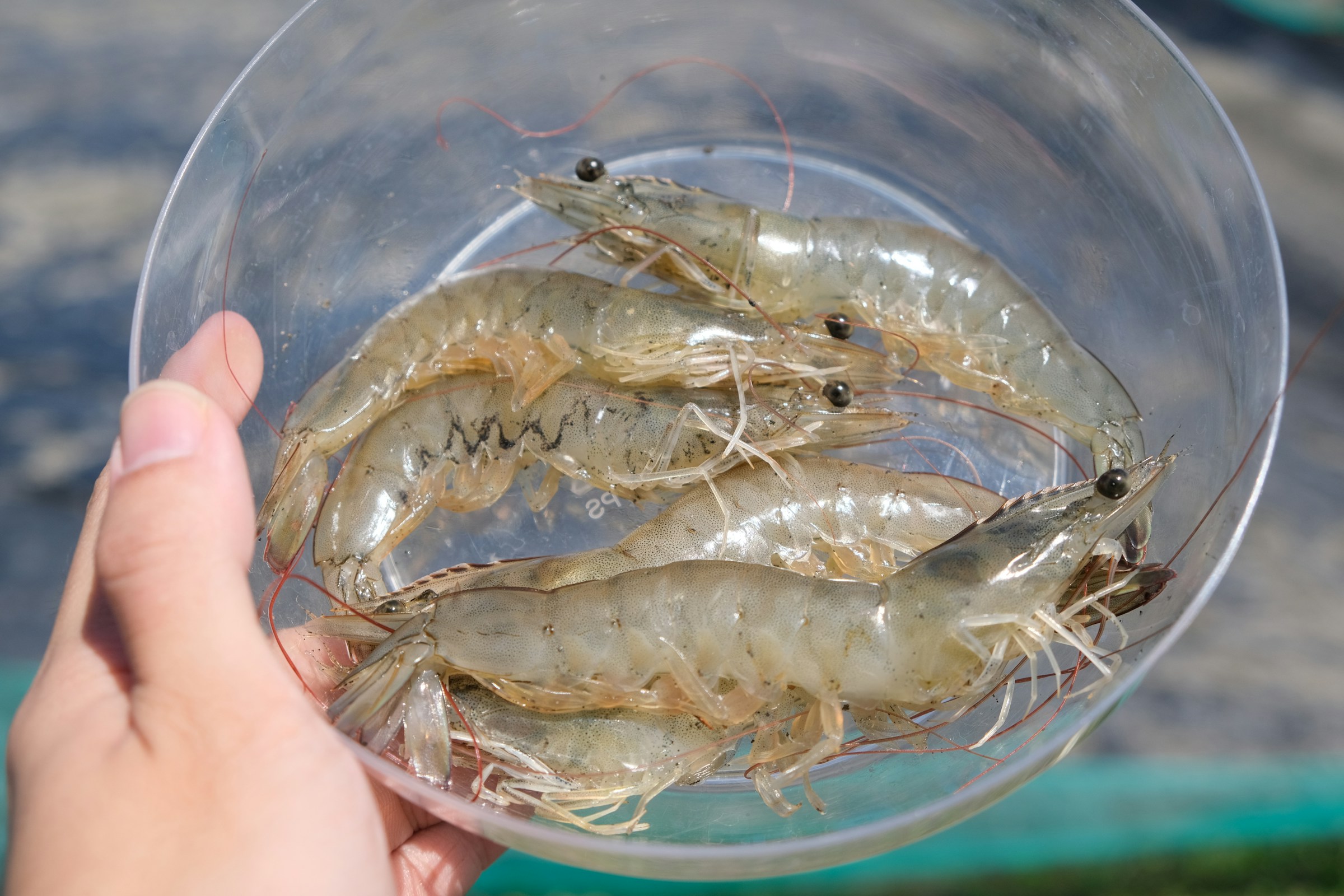
The present study aimed to evaluate the impacts of different types of soybean meal (SBM) and animal protein on the growth performance, feed utilization efficiency, intestinal histology, and physiological gene expression of the Pacific white shrimp (Litopenaeus vannamei). Two trials were conducted, one in a green water and one in a biofloc-based recirculating system, each over an 8-week period. A total of nine diets were evaluated which included the basal diet containing 48 % solvent-extracted soybean meal (SE-SBM) as a primary protein source. The SE-SBM was then replaced on an isonitrogenous basis with low oligosaccharide soybean meal (LO-SBM), soy protein ceoncentrate (SPC), enzyme-treated soybean meal (ET-SBM), and expeller-pressed soybean meal (EP-SBM) on an isonitrogenous and isolipidic basis. An animal protein-based diet was also included as a reference. Except for the survival rate (P > 0.05), all growth indices in the experiment showed significant differences among treatments (P ≤ 0.05). In both trials feeds containing 100 % replacement of SPC performed poorly in terms of growth and feed utilization and LO-SBM diets resulted in better performance of the shrimp. Both studies found no enteritis-related histomorphological changes in the shrimp guts (P > 0.05, ω2 = 0.000, 95 % CI: 0.000, 0.000). In the green water trial, no health-related gene expression changes within the gut were detected. For the indoor biofloc system, shrimp fed soy protein concentrate and solvent-extracted soybean meal showed an overall down-regulation of the target genes when compared to low oligosaccharide and expeller-pressed soybean meal (P < 0.05). The current study demonstrates that there were no apparent signs of enteritis and soy-based ingredients support shrimp growth that is similar or better than animal-based feeds. More research on plant-based protein sources is needed to optimize the dietary matrix and diversify component sources to enhance shrimp growth performance.
Nguyen, K.Q., A. S. Hussain, A. N. Araujo, L. M. Strebel, T. L. Corby, M. A. Rhodes, T. J. Bruce, J. Cuéllar-Anjel, D. A. Davis. 2026. Effects of different soybean protein sources on growth performance, feed utilization efficiency, intestinal histology, and physiological gene expression of Pacific white shrimp (Litopenaeus vannamei) in green water and indoor biofloc system. Aquaculture, Volume 611, ISSN 0044-8486. https://doi.org/10.1016/j.aquaculture.2025.743021