
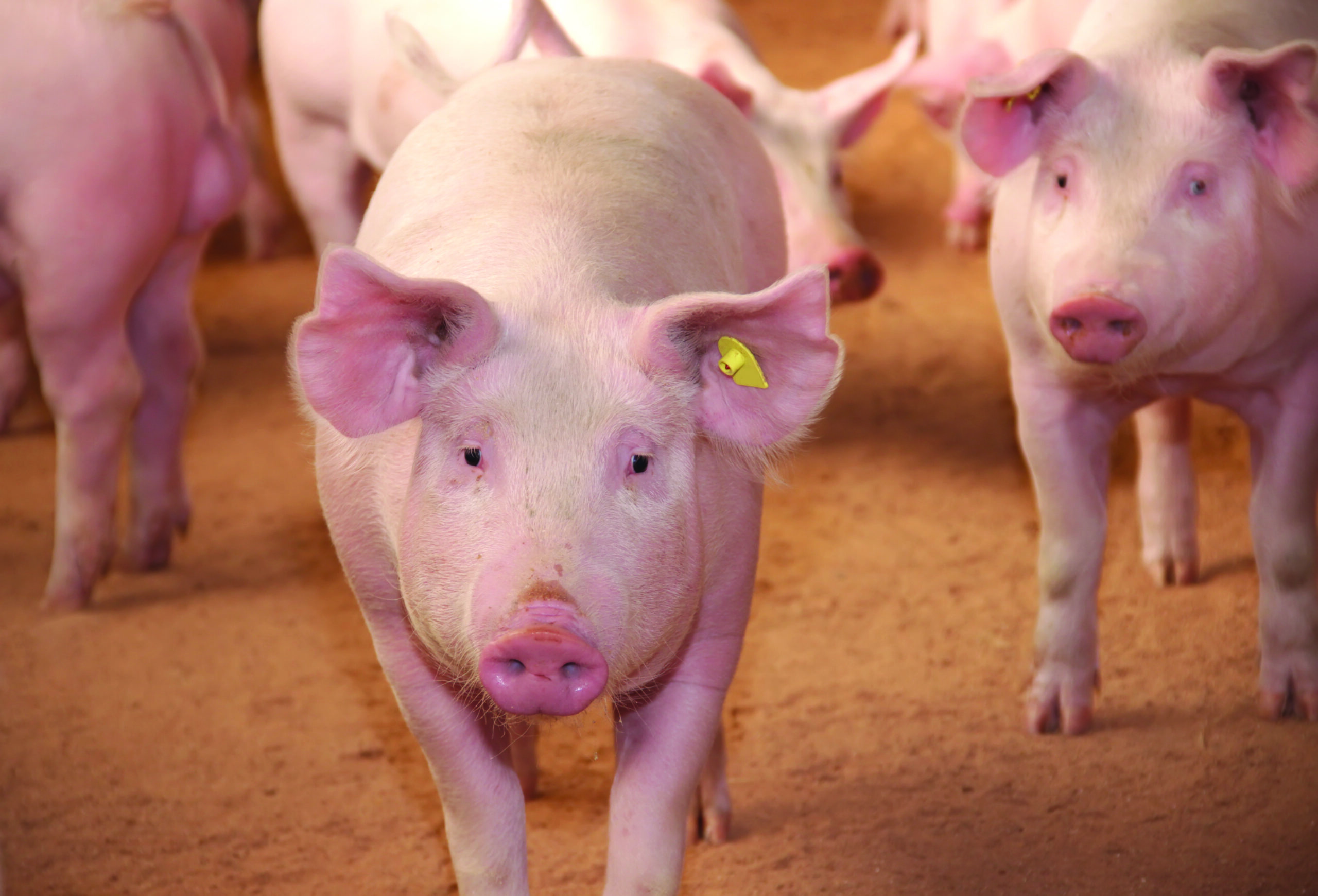
An experiment was conducted to test the hypothesis that the energy in soybean meal (SBM) fed to pigs determined using a fat equivalency procedure is greater than current book values for net energy (NE). A total of 120 growing pigs were allotted to five dietary treatments. A diet based on corn, soy protein concentrate (SPC), and synthetic cellulose and three diets containing 2%, 4%, or 6% soybean oil (SBO) were formulated. A fifth diet that contained corn, SPC, and 12% SBM, but no SBO, was also formulated. Pigs were fed experimental diets for four weeks and daily gain, daily fed intake, and gain-to-feed ratio (G:F) were calculated. Regression of G:F for pigs fed diets without SBM against the increasing levels of SBO was used to create an equation to predict the response in G:F of adding SBO to the diets. Results demonstrated that G:F increased (linear, P < 0.001) by increasing SBO in the diets and the G:F of pigs fed the diet containing 12% SBM corresponded to a diet containing 4.70% SBO, which is equivalent to 2955 kcal NE per kg. In conclusion, the NE of SBM in diets for pigs is greater than previously thought.
Ibagon, J.A., H. H. Stein, and S. A. Lee. 2025. The soybean oil equivalency of soybean meal indicates a high energy value of soybean meal when fed to growing pigs. Canadian Journal of Animal Science. 105: 1-7. https://doi.org/10.1139/cjas-2025-0002