
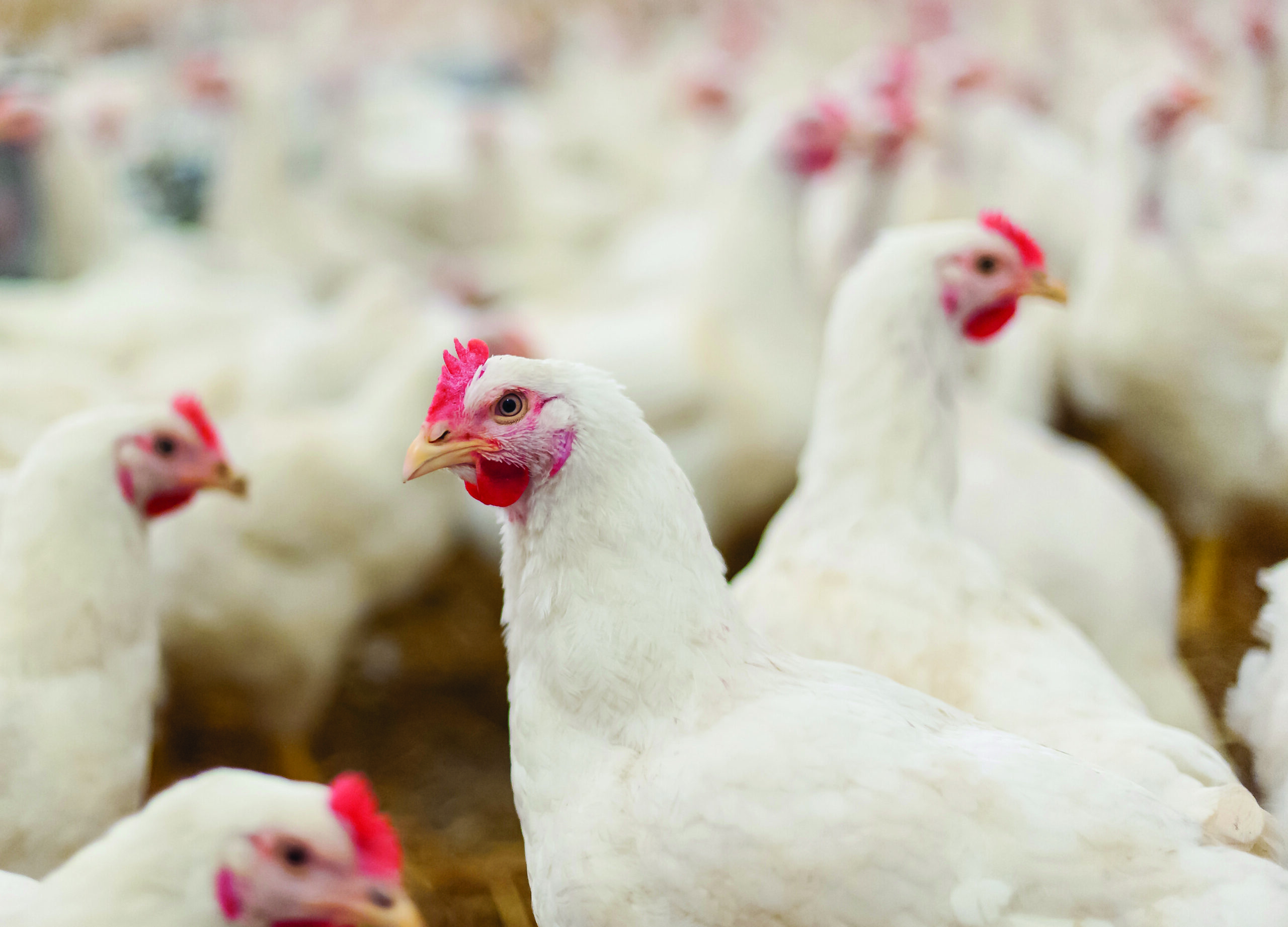
Soybean is a key plant-protein source often included in poultry diets for its nearly complete amino acid profile. Outside of protein, soybeans contain a multitude of bioactive compounds that have garnered attention for their potential immunomodulatory effects. Soy saponins are one such compound that may have beneficial anti-inflammatory, antioxidative, and antiparasitic properties. In this study, 810 male Ross 308 chicks at 2-d post-hatch were allotted to 1 of 9 treatment groups with 10 birds in 10 replicate cages for treatments 1-6 and 7 birds in 10 replicates for treatments 7-9. This 28-d feeding study was conducted in a 3 × 3 factorial arrangement with factors including: 1) saponin supplementation (3 levels; no supplementation, soy saponin supplementation at 250 mg/kg active soy saponins, or yucca-derived saponin supplementation at 250 mg/kg commercial yucca saponin product) and 2) challenge status (3 levels; unchallenged, lipopolysaccharide (LPS) challenged, or Eimeria coccidiosis vaccine challenged). After a 15-d acclimation period and 24-h feed withdrawal, birds in Eimeria-challenged groups (treatments 7-9) were orally gavaged with a commercial coccidiosis vaccine at 5× the recommended dose while control group birds (treatments 1-3) received a sham gavage. Cloacal temperatures, blood, and intestinal tissue samples were collected at peak infection [6 d post-inoculation (DPI)] and at study termination (13 DPI). On study d 22, birds in LPS-challenged groups (treatments 4-6) received an intraperitoneal injection of E. coli O127:B8 LPS at 2 mg/kg body weight (BW) while control birds received a sham injection. Cloacal temperatures and blood were collected at 0-, 2-, and 4-h post-injection while intestinal tissue samples were only collected at 0- and 2-h. All data were analyzed by ANOVA using the MIXED procedure of SAS. Cloacal temperatures were not affected (P > 0.05) by treatment at any of study time-points. Coccidiosis vaccine challenge status was confirmed via oocyst counts, but no differences (P > 0.05) were observed for oocyst excretion between infected treatments. Eimeria-challenged birds had reduced (P < 0.05) feed intake (FI) and BW gain (BWG) during the peak infection period (d 14-21), resulting in increased (P < 0.05) feed conversion ratios (FCR) compared with the non-challenged control treatment. During this period, both soy and yucca saponin supplementation improved (P < 0.05) FCR in Eimeria-challenged birds compared with challenged birds on a control diet. LPS challenge had variable effects on FI and BWG post-challenge (d 21-28) but no significant differences (P > 0.05) on FCR. Overall, saponin supplementation elicited the most evident benefits in Eimeria-infected birds, improving their FCR during peak infection. Whether this can be explained by their purported anti-inflammatory and antioxidative properties remains to be seen.
White, C. and R. Dilger. 2026. Modulation of Growth and Immune Function by Soy Saponins in Poultry. ASAS Midwest Section Meeting. Abstract 164. https://doi.org/10.1093/jas/skag107.159