
Soybean meal (SBM) is the primary protein source used in swine diets in the U.S. Midwest region, typically combined with synthetic amino acids to support optimal growth, and performance. While the inclusion rates of SBM typically vary based on market prices, different levels can have significant effects on pig performance and health due to other compounds that are present in SBM, such as polysaccharides and oligosaccharides. These components affect gut health and the microbiome, through metabolic pathways that are not yet fully understood. With new soybean processing facilities in the Midwest, increased production of SBM may reduce its market price, making it a more accessible and economically viable amino acid source. In this context, a better understanding of the effects of higher SBM inclusion compared to low inclusion on the swine gut environment and its microbiome is needed. We hypothesized that distinct populations of bacteria that degrade fiber from complex carbohydrates will be in higher abundance when pigs are fed with high SBM inclusion diets compared to low SBM inclusion diets.
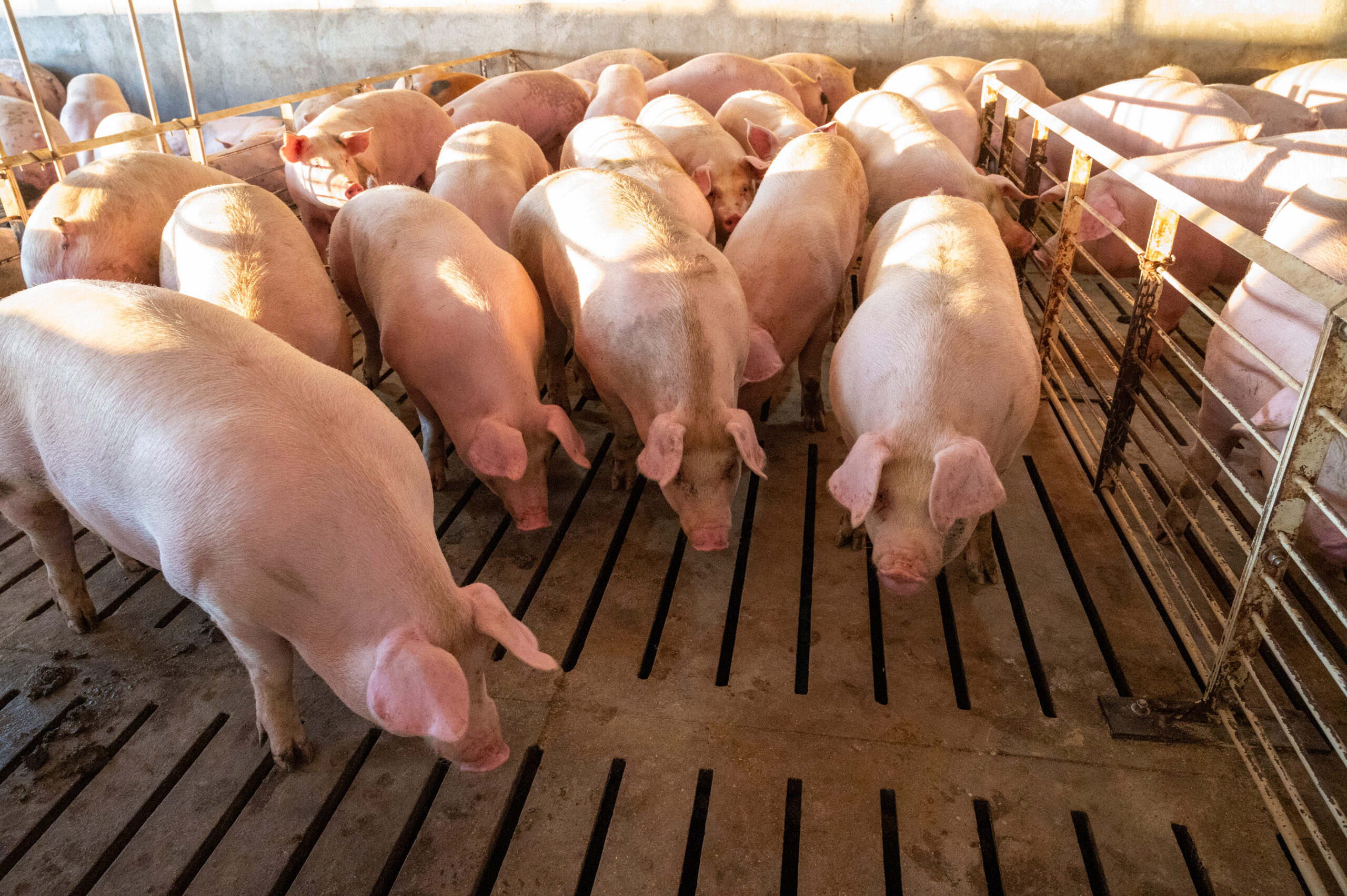
546 mixed-sex pigs were used in a 111-day trial to evaluate the effects of diets with 1) low SBM inclusion supplemented with synthetic amino acids (5%; LowSBM) versus 2) high SBM inclusion (28%; HighSBM). All diets were formulated to meet or exceed NRC requirements, with standardized ileal digestible (SID) lysine and net energy (NE) levels kept constant across treatments. Pigs were randomly assigned to treatments and blocked by location, with 26 pigs per pen, 10 pens on the LowSBM treatment, and 11 pens on the HighSBM treatment. To determine fecal bacterial composition and identify candidate gut microbial species, 14 fecal samples per treatment were collected for DNA extraction and 16S rRNA sequencing via PCR amplification of the V1–V3 regions.
A 16S rRNA gene-based analysis of beta diversity, visualized through Principal Coordinate Analysis (PCoA) with Bray-Curtis distances, indicated significant differences in bacterial composition between the two treatments (PERMANOVA, P < 0.05). Notably, we found a higher abundance of specific OTUs in the HighSBM samples compared to the LowSBM samples (P < 0.05, Kruskal-Wallis test). These included (respective relative abundances in HighSBM and LowSBM samples provided, as well as closest valid relative and nucleotide sequence identity): Ssd-0039 (15.00% vs. 10.00%; Streptococcus alactolyticus, 99%), Ssd-1160, (2.00% vs. 0.10%; Treponema brennaborense, 88%), Ssd-1254 (2.00% vs. 0.03%; Treponema bryantii, 97%), and SBM1-41761 (1.60% vs. 0.22%; Pedobacter nanyangensis, 83%).
With SBM becoming more affordable, this study offers insight into optimizing protein in swine. Results support the hypothesis that HighSBM alters gut microbiome composition, potentially influencing production of short-chain fatty acids and other metabolites. Based on their higher abundance in samples from the highSBM diet, OTUs Ssd-0039, Ssd-1160, Ssd-1254, and SBM1-41761 may be associated with fiber degradation and utilization. These uncultured bacteria may still be undescribed, and further metagenomic analysis is needed to predict their metabolic roles. In the long term, understanding these OTUs may clarify how polysaccharides and oligosaccharides are degraded in the swine gut and their role in short-chain fatty acid production.
Martinez, A., C. Pohlen, J. Halbur, E. Weaver, and B. St-Pierre. 2025. Effects of High Soybean Meal Inclusion on the Gut Microbiome of Finishing Pigs. 2025 Allen D. Leman Swine Conference Proceedings, p 211-212.
Read the article in PORK about this study here.