
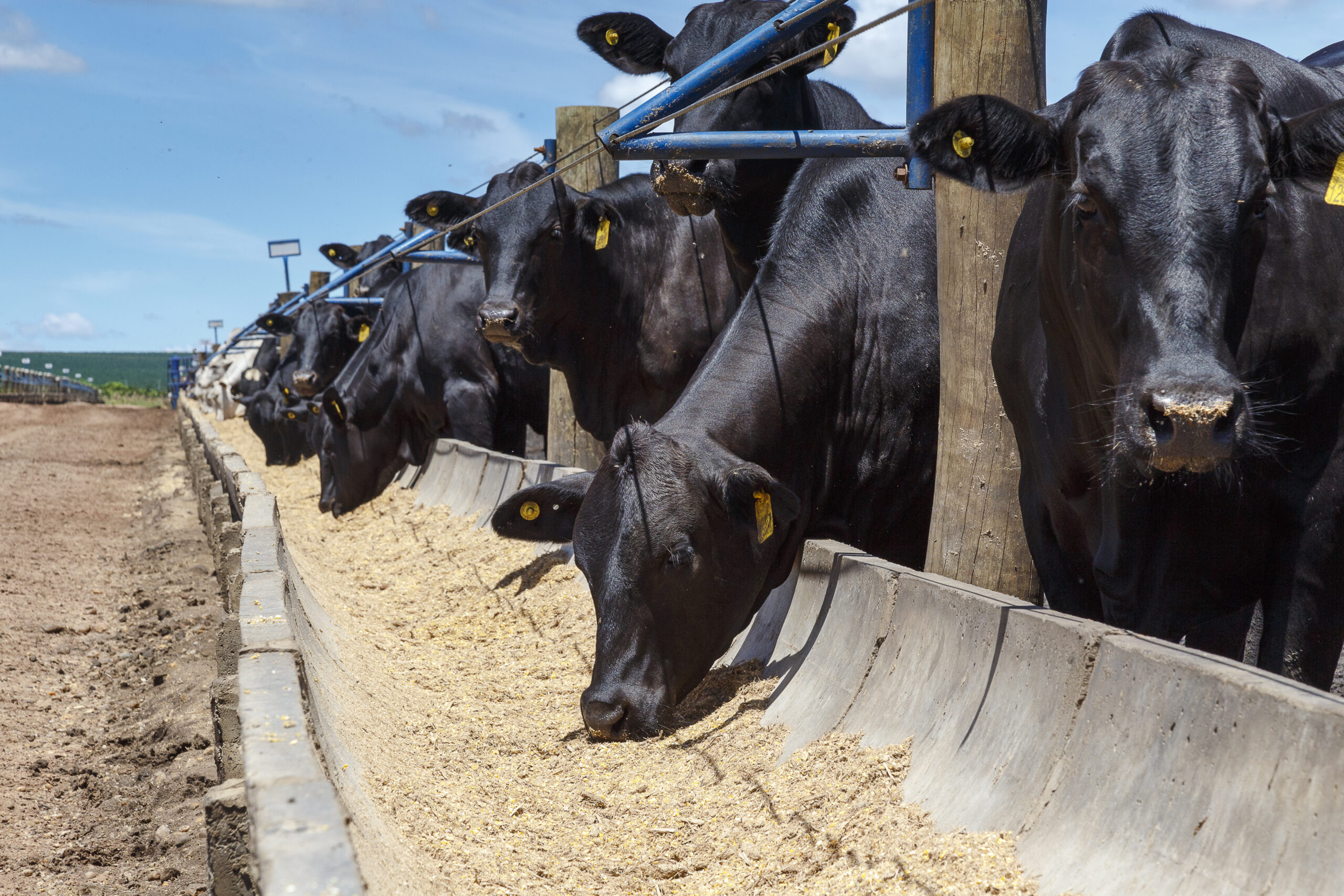
Beef cattle, like other meat animal species, have an amino acid (AA) requirement driven by energy consumption and composition of growth. The approach used to formulate diets, however, targets crude or metabolizable protein minimums that are nonspecific in AA supplies. The obvious question is can beef cattle growth performance be improved by balancing diets for AA requirements compared to targeting a protein level requirement. Two limitations to formulating beef diets to meet AA requirements are efficacy and probability. Given the contribution of microbial protein from the rumen, does an AA deficiency even exist? Is it possible to predict AA flowing to the small intestine with sufficient accuracy that would enable diet formulations to meet AA requirements? Research has shown growth performance improvement from increased absorbable AA supply. Such research has been sufficiently repeatable to make the argument that microbial protein supply, in addition to dietary protein escaping the rumen, does not complement the range of diets fed to optimize AA nutrition for growing calves. Prediction of AA flow post-ruminally has been variable in accuracy, making diet formulation improbable. CNCPS, foundational to modeling beef diets, recognized limitations in prediction of microbial growth in the rumen and identified a need of more descriptive empirical equations to improve predictive accuracy. Such an adjustment and comparative review of AA compositions between feed proteins and requirements for maintenance and growth functions were used to formulate diets to meet amino acid requirements of growing calves. Assumptions needed to predict AA flow to the intestine and AA requirements of growing calves will be reviewed. Research and on-farm data will be presented where diets formulated to meet AA requirements showed increased growth performance of beef and beef cross calves. General comparisons of growth performance by calves fed AA balanced diets to calves fed imbalanced but CP/MP adequate diets have shown reduced costs of gain, heavier carcass weights and increased ribeye area. While this presentation argues that diets can be modeled to meet amino acid requirements, the argument is also made that selection of protein ingredients more complementary to the calf’s requirement, such as soy protein compared to corn protein, can reduce production cost and increase product value.
Kerley, M. 2026. Use of Soy Protein in Beef Diets to Meet Amino Acid Requirements. ASAS Midwest Section Meeting. Abstract 223. https://doi.org/10.1093/jas/skag107.267