
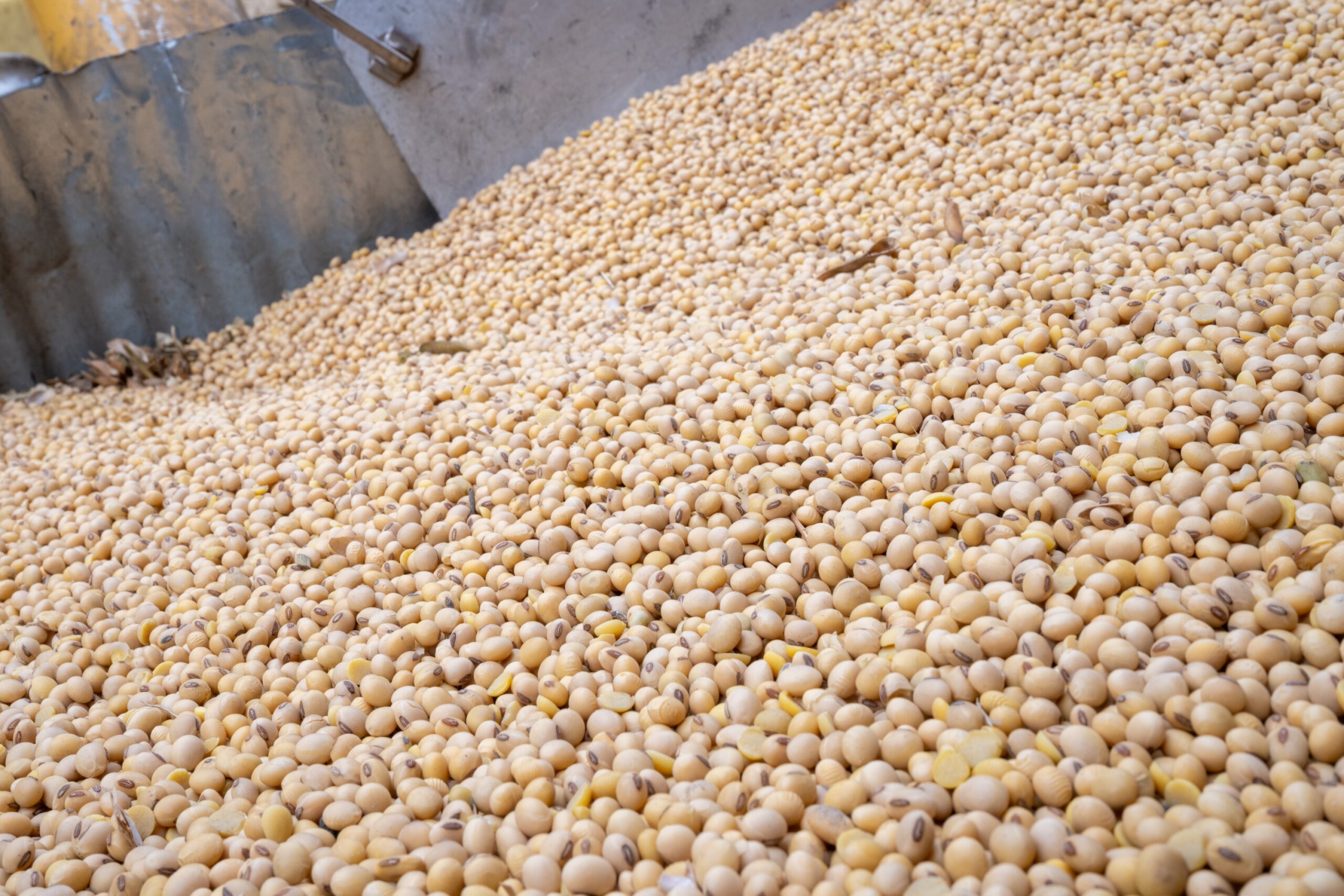
High-oleic soybeans can reduce feed costs but require consistent nutrient testing, proper roasting and appropriate particle size to optimize protein availability and fat digestion.
Nutrient variability can be considerable when it comes to soybeans of any kind; HOSB are no exception. However, because we often see higher feeding rates of these beans due to their lower linoleic and higher oleic content, this variability is amplified in a ration. So, 2% of a given nutrient, say fat or protein, may not sound significant, but at a 9-pound feeding rate, this equates to nearly 2/10 of a pound difference.
Roasting and processing quality is one of the most common talking points with HOSB. Raw soybeans have several factors that affect their feeding safety and efficacy. Urease is the biggest one – if not denatured, it reacts with urea in the rumen and can cause toxicity. Adequate heating is key to denaturing urea.
Rumen degradable portions can help provide nutrients to microbial protein, but bypass protein can provide valuable lysine directly to the cow. Recent research assessing bypass lysine has even showcased its instrumental role in driving butterfat production.
Like ground corn, high-moisture corn and even corn silage, particle size is a critical factor in how the cow and the microbes will use HOSB. Prior to recent years, the typical recommendation was to feed beans as halves or quarters; however, there is more recent speculation that a finer grind size may allow for more fat digestion.
Read the full article here.