
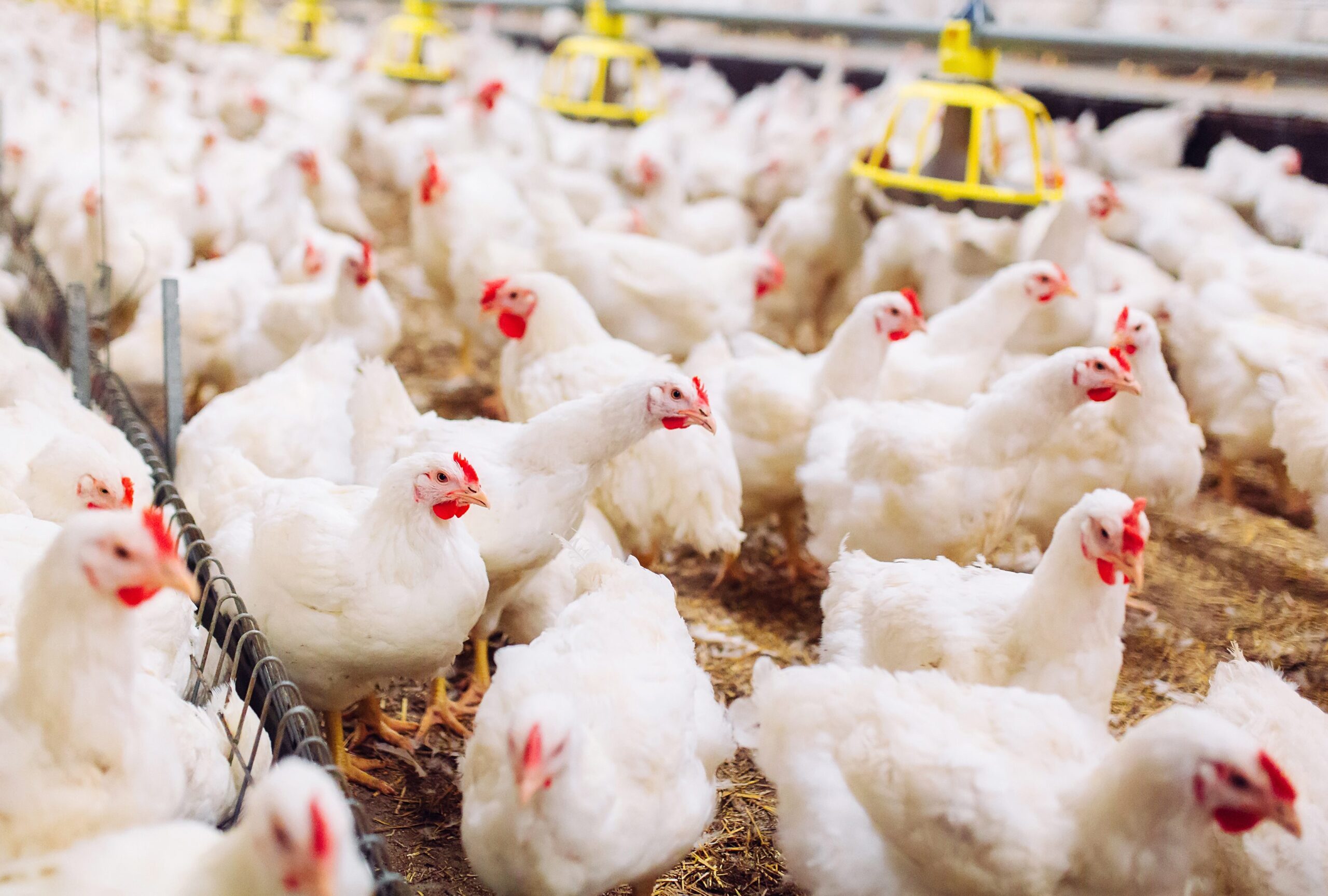
The surge in soybean meal (SBM) availability poised by the increase in production of biodiesel is projected to continue to lower the price of SBM and feed cost, prompting farmers to consider greater utilization of this valuable protein source in broiler diets. Consequently, optimizing dietary electrolyte balance (DEB) and amino acid (AA) ratio (non-essential/essential) is critical for sustaining growth performance and metabolic efficiency in broilers particularly under variable thermal environments. Two experiments evaluated the effects of DEB and AA ratio (Gly+Ser:D ig.lys=1.75) on the performance of broiler chickens under two different thermal environments: moderate and warm ambient temperatures from 0 to 38 d. A corn-SBM based diets containing; 1. normal DEB (230+ mEq/kg) and normal AA ratio with glycine, 2. normal DEB and low AA ratio without glycine, 3. high DEB and normal AA ratio with glycine, and 4. low DEB with normal AA ratio with glycine were fed to a total of 2576 male Ross 308 1-day-old chicks randomly allotted to 14 replicate pens (23 chicks per pen) for each of the four treatments in 2 separate studies to determine the influence of ambient temperatures on rearing environment via live bird performance. Diets were formulated to crude protein and digestible amino acid requirements of Ross 308 broilers, glycine supplementation was used to achieve normal AA ratio, high SBM inclusion was used to achieve high DEB. On day 38, live performance metrics were measured. All data were analyzed using JMP 19. Moderate temperature, 38 d live weight gain (LWG) and mortality corrected for FCR were best for normal DEB or low DEB with normal AA ratio (diets 1 & 4). Diet 2 relative to 1 and 4 increased feed intake FI, decreased LWG and increased FCR (P<0.05). Diet 3 relative to diet 1 and 4 increased FI and FCR (P<0.05). For warm ambient condition 38 d data, LWG and mortality corrected for FCR were best for diets 1 and 3 relative to diet 2 (P<0.05). Normal DEB with low AA ratio decreased FI relative to diets 3 and 4 (P=0.00). High DEB and low AA ratio can be detrimental to broilers when reared during moderate temperature, but high DEB was an advantage during the warm ambient conditions. Increasing SBM inclusion may optimize metabolic demands during warmer conditions.
Reuben Adejumo, R., E. Lynch, L. Knarr1, E. Estanich1 and J. Moritz. 2026. Growth of broilers fed high soybean meal inclusion during moderate and warm ambient temperatures. 2026 International Poultry Scientific Forum, abstract M95.