
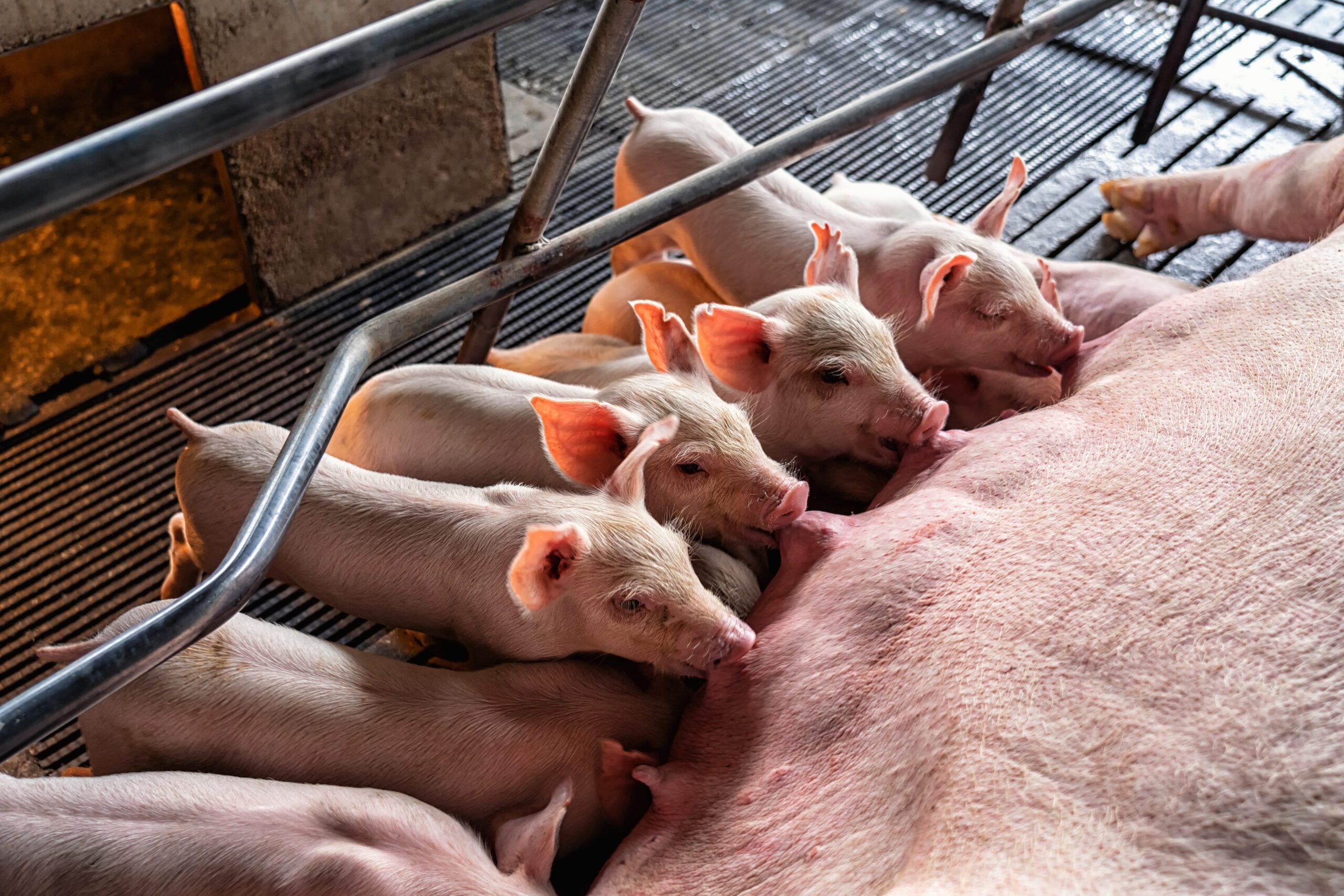
Soybean meal (SBM) is an important protein source in swine diets, but inclusion is sometimes reduced and SBM is partially replaced with synthetic amino acids (AA) because this may sometimes reduce diet costs. Over the past few decades, reproductive efficiency in sows has improved significantly, due to genetic selection, resulting in litters that can exceed 20 piglets. This increase in prolificacy has, therefore, increased the metabolic demands for AA and energy during both gestation and lactation. An experiment was, therefore, conducted to test the hypothesis that feeding sows diets based primarily on corn, SBM, and no crystalline AA will result in improved reproductive performance and immunity of sows compared with sows fed diets with less SBM and more corn and crystalline AA.
Key Points:
- Gestating sows fed the high-protein diet had greater nitrogen intake, absorption, and retention (g/d), which confirms that reduced inclusion of soybean meal may limit nitrogen availability for protein deposition.
- Dietary protein did not influence reproductive performance. However, sows fed the low-protein diets had an increased rectal temperature and more mummified fetuses.
- High-protein diets improved immune responses and improved milk composition, with greater fat, protein, lactose, and IgG concentrations indicating improved milk quality and nutrients to be transferred to piglets.
Read the full report here.
See the abstract of this work from the 2026 ASAS Midwest Section Meeting here: Ibagon, J., H. Stein, and S. Lee. 2026. Effects of Dietary Protein on Nitrogen Balance, Reproductive Performance, Colostrum and Milk Compositions, and Blood Immune Characteristics of Sows. ASAS Midwest Section Meeting. Abstract 44. https://doi.org/10.1093/jas/skag107.095