
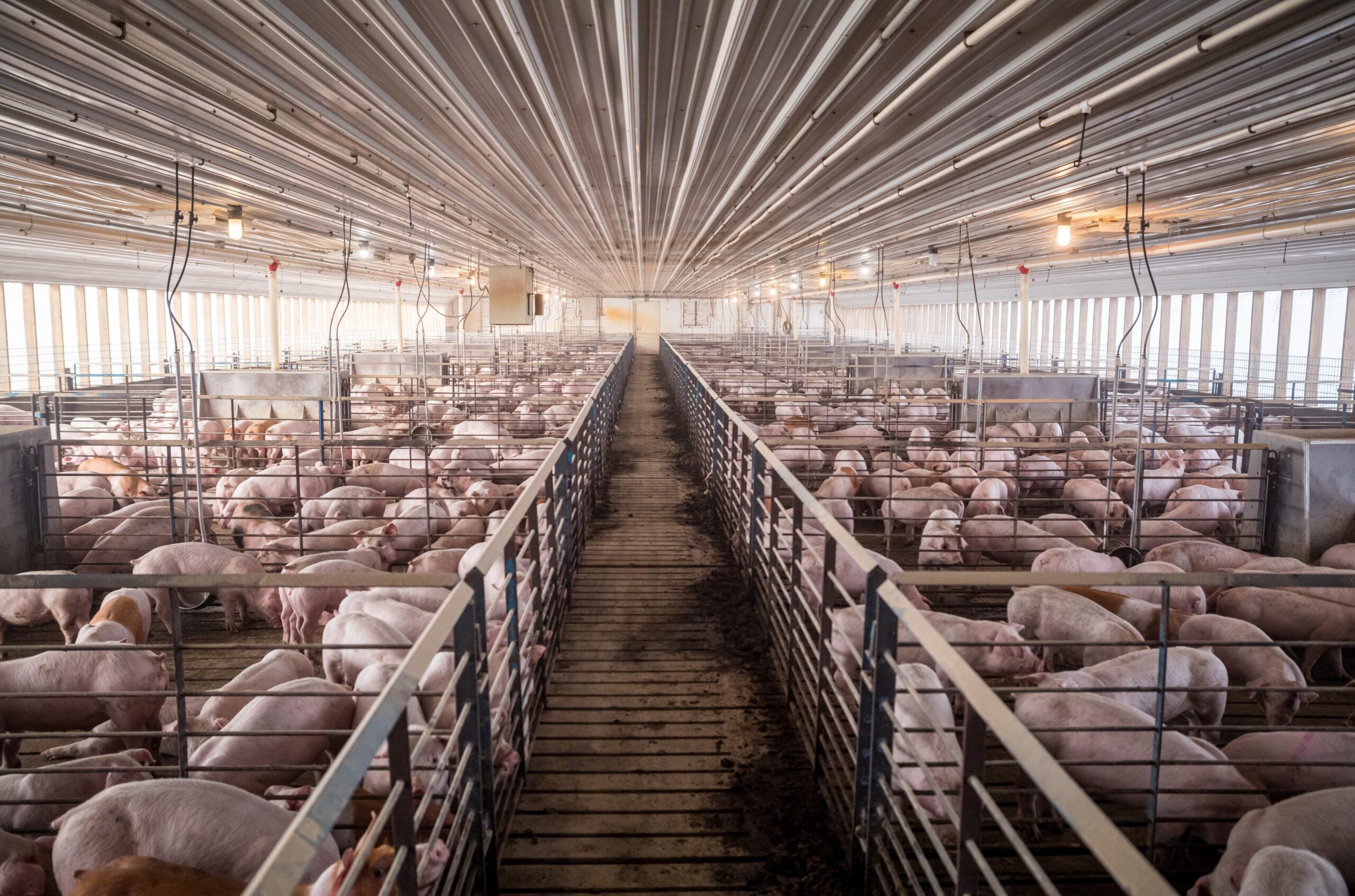
The objective of this study was to evaluate the effect of feeding an elevated level of soybean hulls (SBH) in the gestation diet to sows housed in pens or individual stalls on body weight (BW), body condition score (BCS), biomarkers of metabolic status, and fecal characteristics during mid-gestation (d70). On d28 of gestation, 63 confirmed gestating sows from 3 subsequent breeding groups were assigned to 1 of 4 treatments in a 2X2 factorial (diet and housing type) treatment arrangement balanced by parity and initial body weight. The factor diet included either a standard gestation diet (CTL) containing 20% corn DDGS and no inclusion of SBH with total dietary fiber (TDF) content of 17.77%, or a diet with 19.78% SBH inclusion without DDGS (SBH: TDF=25%). Sows were housed in individual stalls (Stall; 1.28 m2/sow) or pens (Pen; 10 sows/pen, 4.27 m2/sow). Dietary treatments were designed to be isocaloric and isonitrogenous. These were fed to sows from d28 of gestation to d70 at a feeding level of 2.1 Kg/day. Stall sows were fed once a day and Pen sows were fed through electronic automatic feeders with free access until reaching target feed allowance. On d28 and d70 of gestation, blood serum and plasma were collected through jugular venipuncture and analyzed for blood urea nitrogen (BUN), non-esterified fatty acids (NEFA), and superoxide dismutase (SOD). On the same days, sows were weighed, BCS was measured using a caliper (4-18 units), and fresh fecal samples were collected and analyzed for water binding capacity (WBC), swelling capacity (WSC), holding capacity (WHC), and fecal bulk (FB). Data were analyzed using a linear model with diet and housing as fixed effects and parity and breeding group as blocking factors. Sows fed SBH gained more weight than CTL sows (28.5 vs 19.45 Kg; P< 0.001). Pen sows gained more weight than stall sows (27.1 vs 20.85; P=0.003). Likewise, sows fed SBH gained more BCS from d28 to 70 than CTL sows (1.64 vs 0.48 points: P< 0.001). No interactions (P>0.32) of diet by housing were observed in serum BUN, plasma NEFA, blood glucose, and SOD on d28 or 70 of gestation. Pen sows had higher serum BUN than Stall sows on gestation d70 (7.81 vs 6.36 mg/dL; P=0.007). Fecal samples from SBH sows had higher WSC (7.39 vs 6.92; P< 0.001) and FB (25.10 vs 20.9 P< 0.001) than CTL sows. Stall sows had higher fecal WSC than pen sows (7.32 vs 6.99; P=0.008) on d70. Finally, SBH sows tended to have higher fecal WBC (P=0.06), and WHC (P=0.05) than CTL on d70 of gestation. In summary, including SBH in gestation diets improved sow BW gain, body condition gain, and fecal physicochemical characteristics regardless of the housing type.
Leiva, S., F. Letsch, C. Ashton, M. Putnam, A. Petry and D. Rosero. 2026. Effect of Feeding a Diet with an Elevated Level of Soybean Hulls on the Metabolic Status and Fecal Physicochemical Characteristics of Mid-gestation Sows Under Two Housing Systems. ASAS Midwest Section Meeting. Abstract 162. https://doi.org/10.1093/jas/skag107.157