
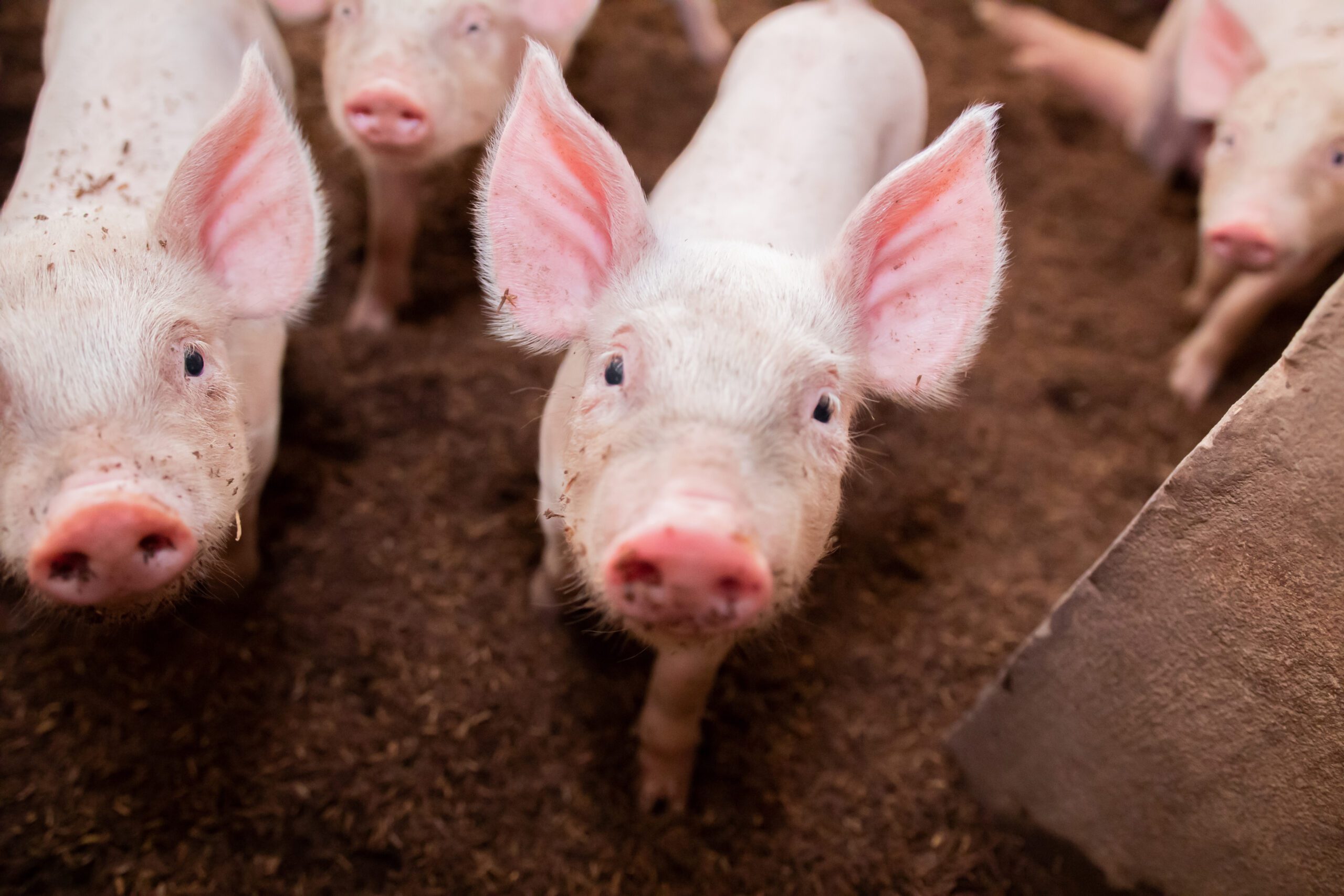
Soybean meal (SBM) is not only a source of amino acids (AA) but also provides bioactive compounds (BC) including isoflavones, insoluble fiber, and omega-3 fatty acids, which can improve intestinal health and growth of pigs. It is hypothesized that replacing the AA supplied by SBM with crystalline AA may compromise intestinal health because BC are removed with SBM. Therefore, the objective was to evaluate whether supplementing BC improves intestinal health of nursery pigs fed SBM-free diets containing adequate AA. Twenty-four weaned pigs (21 d old; 6.7 ± 0.1 kg) were housed individually and assigned to one of three diets including NC (corn-SBM-based diet), PC (SBM-free diet), and BC+ (SBM-free diet with BC matched to the NC level of isoflavone, insoluble fiber, and omega-6 to omega-3 fatty acid ratio), fed for 28 d in 3 phases, and euthanized to collect the jejunal tissue and mucosa. The concentrations of AA were matched across diets using supplemental AA. Depending on phases, the BC+ contained 0.04 to 0.06% added isoflavone (soy isoflavones powder extract); 2.9 to 4.0% added insoluble fiber (Miscanthus powder); and 0.01 to 0.02% added omega-3 fatty acids (fish oil). The pre-planned contrasts were NC vs. PC and PC vs. BC+. The PC increased (P < 0.05) the abundance (cells/100 mg of jejunal mucosa) of Bifidobacterium dentium in the jejunal mucosa compared with NC. The BC+ increased (P < 0.05) the abundance of Lactobacillus pontis and tended to increase (P = 0.093) Olsenella profuse compared with PC. The PC decreased (P < 0.05) the expression of claudin and occludin compared with NC. The PC tended to increase (P = 0.065) tumor necrosis factor-α (TNF-α) compared with NC. The BC+ reduced (P < 0.05) TNF-α compared with PC. The PC reduced (P < 0.05) the jejunal villus height to crypt depth ratio compared with NC. The BC+ reduced (P < 0.05) villus height compared with PC. The PC increased (P < 0.05) the percentage of Ki-67+ compared with NC, whereas BC+ decreased (P < 0.05) it compared with PC. The PC increased (P < 0.05) average daily gain (ADG) during d 0 to 10 compared with NC, whereas BC+ tended to reduce (P = 0.071) ADG during d 0 to 10 compared with PC. The PC tended to increase (P = 0.087) average daily feed intake compared with NC, whereas BC+ tended to reduce it during d 22 to 28 (P = 0.050) and overall period (P = 0.079). In conclusion, feeding the SBM-free diet with sufficient supplemental AA impaired intestinal integrity and immune function in the jejunum, whereas supplementing BC in the SBM-free diet increased the abundance of selected beneficial bacteria and partially mitigated inflammatory responses in the jejunum of nursery pigs.
Garavito-Duarte, Y., J. Sung and S. Kim. 2026. Beyond Amino Acids: Role of Bioactive Compounds in Soybean Meal for Intestinal Health Nursery Pigs Fed Soybean Meal Free Diets. ASAS Midwest Section Meeting. Abstract 280. https://doi.org/10.1093/jas/skag107.194