
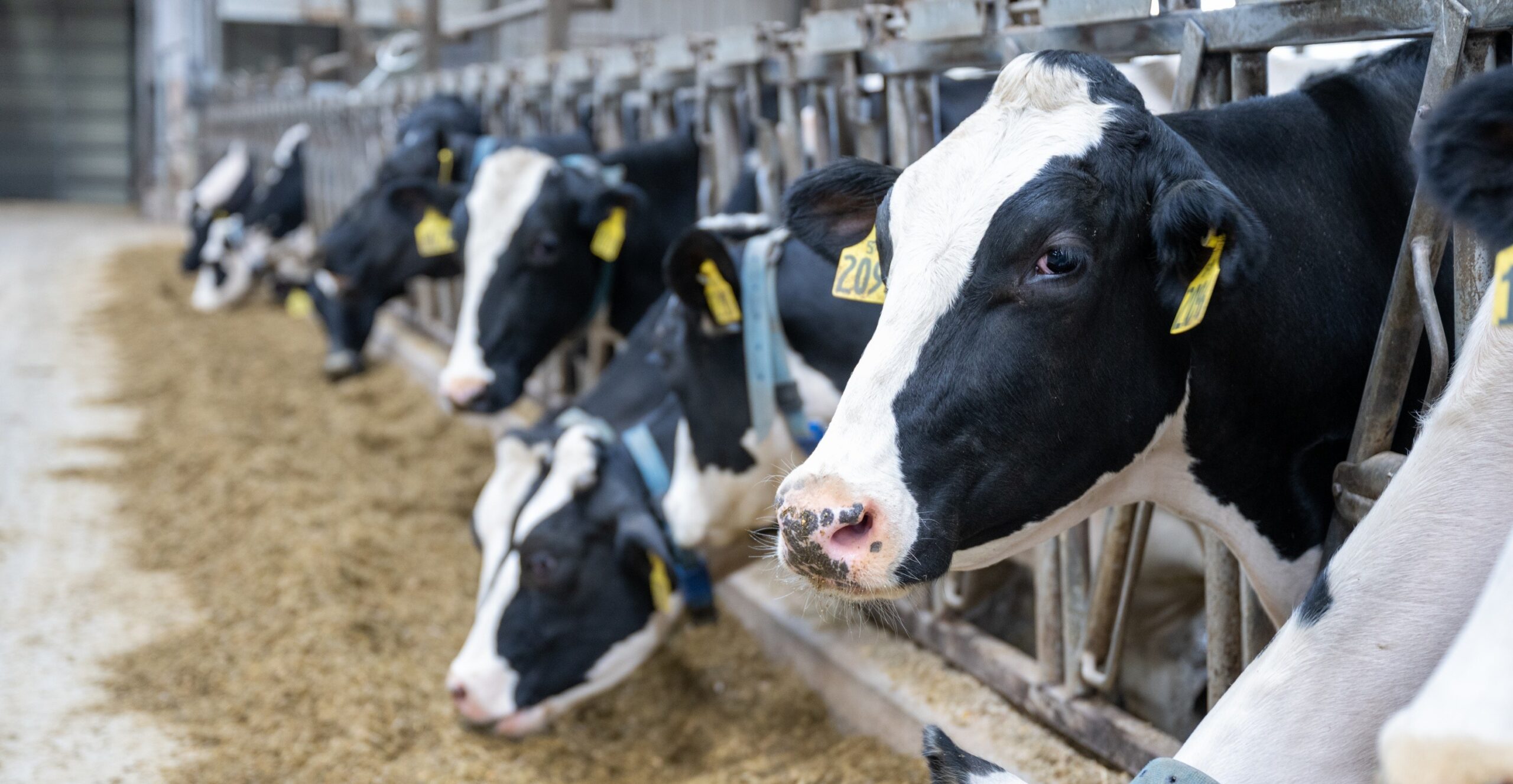
T&H Dairy is operated by Mike Halfman and his family near Fowler, Michigan. They milk 1,600 cows with about 4,400 acres of corn, alfalfa, wheat and soybeans. More than two years ago, the family began exploring the use of high-oleic soybeans in their dairy rations after their seed representative introduced them to the concept. In August 2025, they began roasting soybeans onsite, following almost a year of construction to build their own roasting and storage facility.
Replacing purchased protein and fat supplements with roasted high-oleic soybeans can lessen feed costs and improve margins. Recent economic modeling at Michigan State University found an average income-over-feed-cost advantage of $0.65 per cow per day for farms producing and roasting their own high-oleic soybeans and about $0.27 per cow per day for farms buying roasted beans and paying transport.
Entering into a high-oleic soybean contract with another farmer typically means one party, often a dairy farmer, intends to use the soybeans as feed. In that case, it’s important for both parties to identify the number of soybean acres or bushels needed to meet the herd’s nutritional requirements as well as the amount the soybean farmer can reasonably supply. In a science-backed ration, one milking cow consumes approximately one acre of high-oleic soybeans on average per year.