
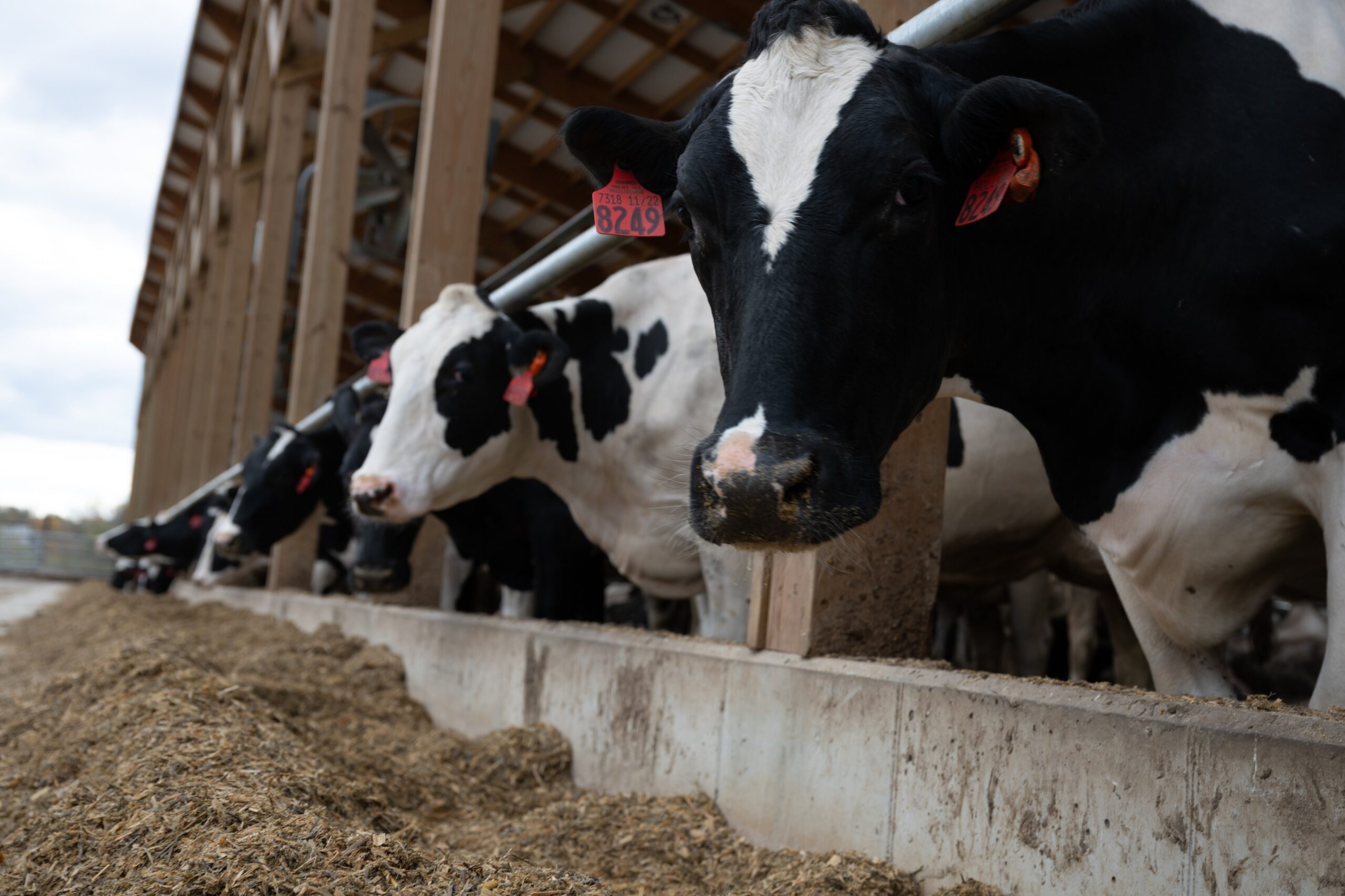
Dairy cows produce more milk than ever, creating tremendous energy demands for the animals. According to Adam Lock, professor of dairy nutrition at Michigan State University, nutritionists often supplement rations with fat because fat contains more than twice the energy density of carbohydrates.
While some research demonstrates these benefits at inclusion rates as high as 16% of the diet, Lock said most dairy producers will likely find success at lower levels. “You can go up to 16%,” he said. “I think that 8–12% is more realistic because it’s going to depend on availability, how much you have in storage, or how much you can buy, economically.”
Brian Preston milks about 1,000 cows in south Michigan, near Quincy, and has been feeding high-oleic soybeans for the past three years. “I think it’s a huge win for the local economy,” Preston said. “We’re paying the soybean growers $1 more [per bushel] than what they can get at the elevator for their beans. Most of [the growers] are within a few miles, so their transportation costs are really controlled, as well.”
The rotation change also paid dividends in the field. Preston said incorporating soybeans into fields that had been continuously planted to corn for decades has also improved corn silage yields on his farm.
While enthusiasm grows, seed availability remains one of the biggest barriers to expansion.
Roger Theisen, the commercial lead for Pioneer’s Plenish high-oleic soybean program, said rapid dairy adoption grew more quickly than anticipated. The transition to Enlist E3 genetics is expected to help accelerate adoption.
Despite rapid growth, many supporters of high-oleic soybeans believe the market is still in its early stages.
“I think most of the cows in the U.S. are going to be on high-oleic beans at some point,” Preston said. “I think this is transformative to the industry.”
Read the full article here.